Why switch from your current software?
Why should I consider another software package when I already

have one?
Everyone who uses a flow cytometer has software that was

purchased with the instrument, but what is your current software

costing you? Do any
of the following scenarios sound familiar:
| 1 |
Your
software is slow to update while you are performing the analysis.


Does it take several minutes for your current program to
process even small adjustments such as the moving of a gate, loading in
new files or applying new gates? Wasting time is wasting
money. |
| 2 |
Your
software crashes just when you are at the end of analyzing a patient

sample. Many clinical analysis templates are
quite complex, using multiple gating strategies, histogram overlays,
and other tools to help generate results and reports. If the
processing of one of these functions takes too long, there is a good
chance that your program will crash or at the very least lock up
causing you to have to reboot the computer. Many times, all
the work done prior to the crash or lock up is gone or corrupted
requiring one to restart the entire process. Using unstable
software wastes time. |
| 3 |
Training
new people takes a long time. New instruments
often mean new software programs. Different vendors use
different names or jargon for similar functions. Techs may need to keep
up with multiple software programs if there are different instrument
platforms in use. Training and maintaining skill levels takes
time. |
| 4 |
You are
doing a lot of manual work to report your case.
Time is spent doing things like copying values from one sheet
of paper to another, doing calculations by hand on a calculator, and
writing down staining intensities. Many labs have report
sheets that need to be completed manually for case review.
The lucky labs may have some of the math done for them when
they manually enter the data into a LIS, but no one is immune to the
possibility of clerical errors. Subjectivity and lack of
standardization can become real problems in even simple classifications
such as grading staining intensities. Doing things by hand is
laborious and wastes time. |
| 5 |
You have
manual quality control and log books. Are you paying
people to tick off long checklists of things to try to eliminate
careless errors, instead of them concentrating on the interpretation of
the case? Do you use creative means such as creating labels
with lot numbers, serial numbers, etc. to document QC for each case?
How much time is spent checking to see if any results fall
outside your designated ranges and what happens when those ranges
change? If you could find a way to automate quality control
checks wouldn't you be saving a lot of time and effort? |
| 6 |
You have
made careless mistakes. The pressure of meeting
critical turn-around-time deadlines leads to mistakes, especially in
labs with large workloads. Problems such as loading
the wrong patient files, copying the wrong value from one place to
another, placing a gate in the incorrect position are common examples.
Multitasking demands and staffing shortages increase these
odds. How much is it costing you to fix these inevitable
mistakes? |
| 7 |
The
pathologist wants to adjust the gate, which means that you have to
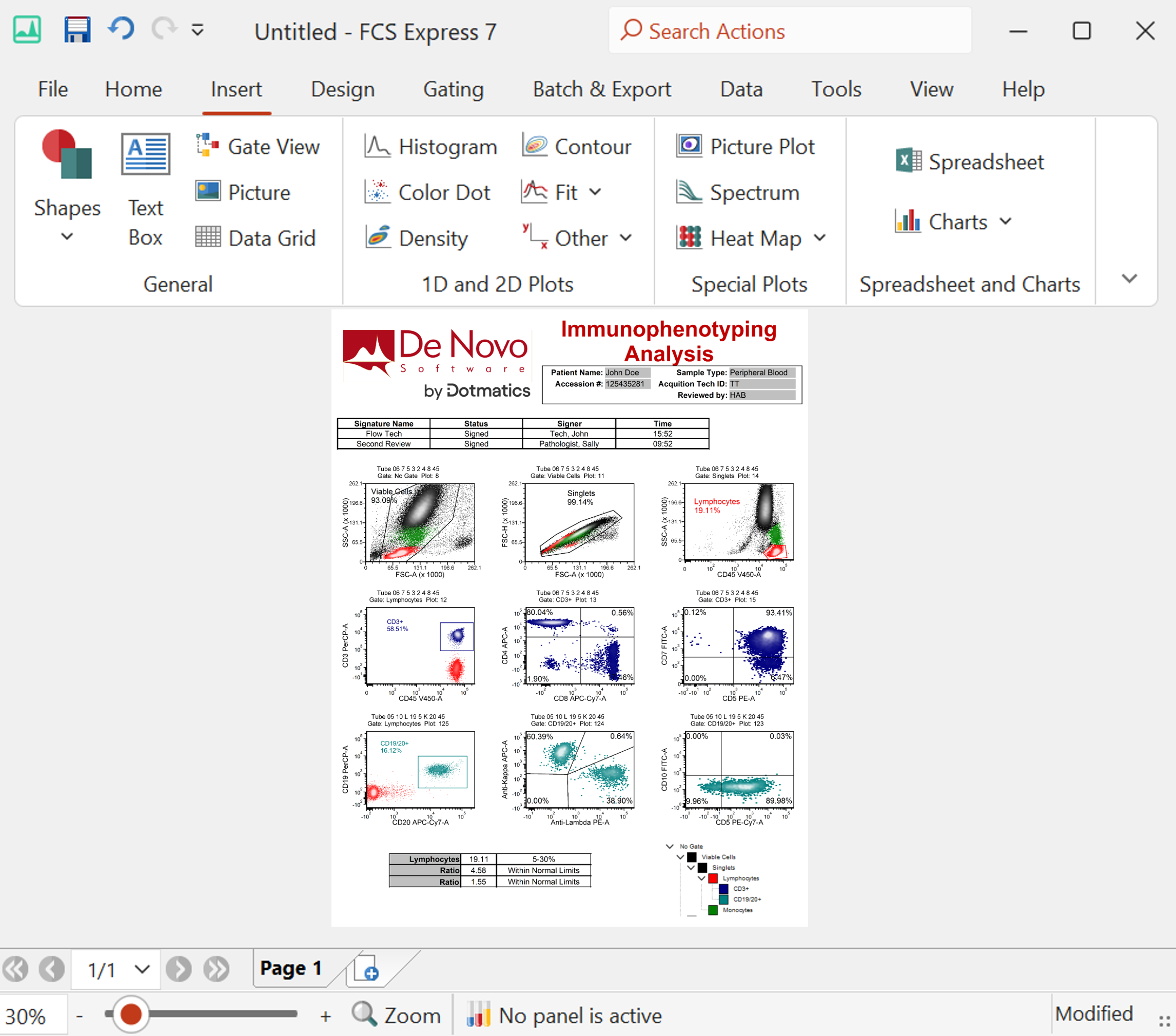
start over and re-analyze the entire case. PDF
files are nice way to document your final analysis, but don't allow for
making any adjustments. Some software programs allow you to
save gate placement in individual FCS files but in reality, most labs
analyze multiple files together as in Leukemia or Lymphoma panels.
Making changes to this type of analysis requires the data to
be located and reloaded into the analysis template. Is
analyzing the same case twice something you want to be spending time
and money on? |
| 8 |
Generating
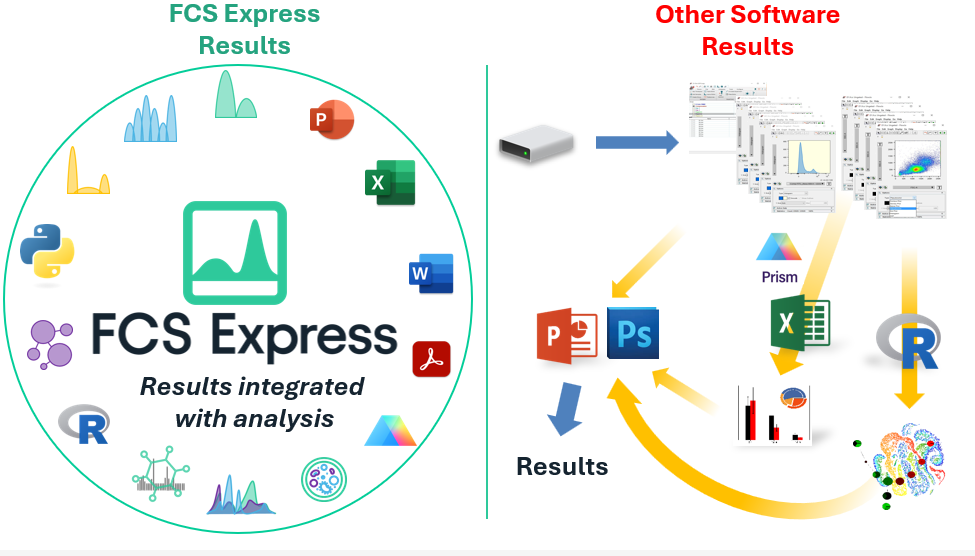
the final report is a labor intensive process.
Many labs need to perform multiple steps to generate simple
reports. Tasks such as cutting and pasting, creating
complicated spreadsheet macros, doctoring up graphics in Paint or
Photoshop are common practice. Moreover, "custom" report
generators don't allow for complete flexibility for reporting.
Hiring a separate cytometry transcriptionist is not possible
in most clinical labs. Does a great report have to equal
great amounts of time spent? |
| 9 |
Technical
support is lacking or absent. Does calling
technical support with your software questions generate the response
you needed? Or did you spend your time waiting in the queue or
by being transferred about only to end up with the same person who
answered your call in the first place? Do you know more about
their program than the "technical specialists"? Poor support
wastes your time - who can afford any down time? |
Using software designed for acquisition in order to do your
analysis costs you time and money!
In today's tough economic times, everyone has to focus on
efficiency and productivity. We are all too familiar with
being asked to do more and more with what we have. How much
room for wasted time and money did you put into your budget this year?
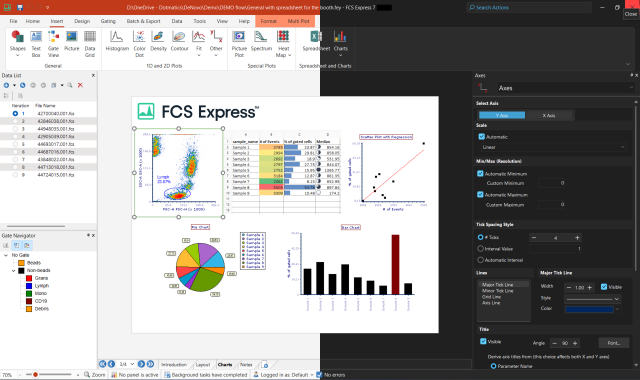
How would FCS Express help solve these issues in your lab? Click here to find out.
|